- 12 Posts
- 511 Comments

I own a Hase Pino Tour, and it’s my daily utility bike. I used to own a Bilenky Viewpoint (both semi-recumbent). I’ll spare re-writing my comments; I go into greater detail here: https://lemmy.world/post/32634328/18119635
So if you’re in the market for a Pino Tour, I’ll make you a great deal on mine. I bought this while my partner was going through chemo, so that I could take her to doctor’s appointments. I can’t stand a bike that doesn’t get used, so it’s been pressed into service as my daily driver.

Just one dream bike? :D
I recently finished building up a 2023 Trek 920 from a bare frame and for this embodies everything a bike needs to be:
- durable/robust
- resilient/fault tolerant
- all the braze-ons
- does everything I want it to do: urban commuter, randonneuring, grocery-getter, leisure riding, loaded touring, gravel, single-track, jumps, XC…
- fast (enough) yet comfortable: even with the tires I use for thrashing swoopy, mixed surface singletrack; I am less than 0.5MPH down from my average speed on my fast commuter
- loads of carrying capacity
- will accept pretty much any build configuration: 3x9 to 2x11 to 1x12
- doesn’t break the bank
- easy/quick to change loadout for different uses

- Deore XT direct-mount crank 165mm, 32T
- Deore XT SGS rear derailleur
- Deore XT Linkglide cassette, 11-42T and 11-51T, depending on use case
- Microshift 11sp bar-end shifter
- TRP Hylex hydraulic brakes
- 203mm front rotor for more refined modulation on loose and slippery surfaces
- Velo Orange cartridge hubs front and rear
- Spank Flare 24 Vibrocore rims, set up for tubeless
- Phil Wood double-butted spokes
- Bontrager Betasso RSL GX tubeless tires - I strongly believe there is no such thing as an all-conditions tire; this tire just about proves me wrong
- Liv Forward carbon rail saddle, because breedin’ hips came attached to my Y chromosome
- Jagwire Elite Link shift cable, with an inline barrel adjuster near the handlebars - dial out any shift rattle on the fly
- Velo Orange Nouveau Randonneur handlebars, 46cm
- Trek Touring front rack (not shown)
- Trek Backtrack MIK rear rack (not shown)
- Cane Creek 110 headset
- Revelate Designs tangle bag (not shown)
- Salsa Rack-Lock seat collar for…
- Carradice Bagman Expedition mount for Carradice Nelson Longflap transverse saddlebag (not shown)
- PNW Components Pine dropper post (not shown, in the mail)
- Wolf Tooth drop bar dropper remote (not shown, in the mail)
- One-up SPD pedals, red (not shown, in the mail)

 12·6 days ago
My back was to put in rail everywhere with zero roads. People constantly complained about wanting roads, but there was never any congestion. And the desire for roads never seemed to affect anything.
I loved my Bilenky. But that’s a bucket of its own issues. Cons:
- Bilenky. The timeline on the build was originally stated at 3 months; it was delivered 14 months later. Fine, whatever. The stoker boom was welded ~1 degree off-center. That’s the kind of thing nobody would notice. The person to whom I sold could barely notice it even after I pointed it out, but it stuck in my craw.
- The price. My Viewpoint was $11,000USD in 2014. I sold it for $8000 and the buyer didn’t even balk. They drove from Minnesota to Washington to buy it because price and timeline.
- The midship rack. When I bought my Viewpoint, Haulin’ Collin was the only person making the midship rack and center kickstand. He’s a custom bike fab shop in Seattle. The price and timelines are what one would expect for custom. But his work is impeccable.
- It’s huge. But you don’t buy any tandem if you live in a small apartment. You need a place to keep this. It was still slightly shorter than my diamond tandem though.
Pros:
- Bilenky. The design of the Viewpoint is well-trod and tightly refined, having been pioneered in the Counterpoint Opus. Bilenky’s version is dialed.
- Their paint! OMG, their paint is easily one of the best I experienced.
- Generic parts selection. Whatever you want, you can get it spec’d. Want to change something? No problem.
- Independent stoker drivetrain. The stoker can select their own cadence. Unless one is an experienced tandem captain, one might not think this is a that big of a deal. Absolutely buy this option.
- S&S Couplers. If you go with this option, the bike fits into two airline-standard cases. Although it took me two hours to pack it up. And it does limit your component selections a bit.
- Generic recumbent seat. If your stoker wants different ergo, it’s easily accommodated.
- Generic two-legged kickstands work just fine for the bike, but you won’t be sitting on the seat with one of those.
- Rides great solo. This applies to all semi-recumbents. Riding a diamond tandem solo can be risky; the rear wheel wants to slide out in turns.
Another bit on the Hase Pino: if riding solo and without cargo on the front, the front wheel tends to wash out. No bueno. It’s cornering capabilities are a scant fraction of the Viewpoint.
 1·8 days ago
Currently on “Shards of Earth” by Adrian Tchaikovsky as my leisure read. It starts fast and, so far, keeps the throttle mashed. It seems like garden-variety space sci-fi so far, but Tchaikovsky is one of the only fiction authors to surprise me in the past decade. Worst case scenario, I had a decent ride. But I’m secretly going to get my mind blown.
I own a Hase Pino Tour (the “tour” part is important), and it’s my daily commuter/cargo hauler. It’s … okay. For the money, I’d buy another Bilenky Viewpoint, and I had a lot of beefs with Bilenky and the whole process of dealing with them.
I’ll spare you the stories of why I sold the Bilenky and later bought the Pino. But I have a lot of experience with both and bought both of them new/custom ordered.
In no particular order:
- Custom bike, custom problems: Bilenky are handmade custom bikes and the Pino is a custom production bike. Both have all kinds of persnickety issues, some of which might chap your ass or not.
- Almost everything on the Pino is proprietary: the linked steering adapter, the stoker chain tensioner, the stoker “freewheel” mechanism, the captain cockpit, the stoker seat, even the goddamned handlebars… And most of these components are obviously built to a price point, rather than a quality level. Want something different in your cranks and cockpit? Good fucking luck.
- Hase Pino accessories are mostly overpriced garbage. I have the midship pannier rack and porteur bag. Installing either is a huge pain in the dick. The shop warned me that it would be a terrible experience and that they charge accordingly.
- The porteur bag seems great at first. But then you realize the stoker seat is no longer available unless you completely remove the bag. And it has shit weather resistance.
- The midship pannier rack is beyond stupid. It is supposed to be able to hold two Ortlieb front roller panniers per side. Well, only if you have tiny feet, are willing to bend your panniers, and don’t need to get into those panniers. Like ever. It’s such a pain to use the rack that I completely changed how my Pino is laid out. I’d rather use my Burley Travoy trailer.
- The Spinner fork is garbage, but in Hase’s defense, there is maybe one suspension fork in the size that doesn’t completely suck. Still, for as many proprietary parts as are on this $12000 bike, I expect better.
- The stoker seat is narrow, has poor adjustment range, and bad ergonomics. The seat angle is incorrect for every stoker I had. Reclining the stoker back angle interferes with steering. And it’s just plain uncomfortable.
- The wheelbase is much too short and the steerer tube location relative to the stoker COG is all wrong. And that’s some voodoo, because the Viewpoint steerer is under the stoker’s ass, whereas it’s in front of the stoker on the Pino. This makes the Pino very twitchy, especially with a stoker that’s looking around as the semi-recumbent design intended (!). And despite having too short of a wheelbase, the turning radius is enormous. My Viewpoint had something like 30% more wheelbase yet 50% less turning radius.
- There is a lot of lash in the Pino linked steering. I keep futzing with it, but I can’t get the last bit of lash out of it.
- There are so ridiculous, stupid design issues. For example, bottle cage braze-ons? Ha! One set for the captain. On a loaded touring bike! And that’s it for the bike. No place for a handlebar bag. No stoker water bottle braze-ons. Sure, this is all mitigable, but come on.
If the Pino were a $4000 bike and not designed by Germans, I’d cut it a lot more slack. But at the price they sell these things, I have a lot of caveats for anyone considering one.
For graph charts, dependent data goes on the y-axis; independent data on the x-axis.

CBL is one of my all-time faves! Add in Sync24, which is Daniel Vadestrid, AKA ½ of the studio lineup of CBL.
"There was a moth. I saved you from it "
I have a few bikes with aluminum and CF forks. One of my main whips was all aluminum and I sold that bike at ~125,000 miles and had no worries about it going another 125,000. I did everything with that bike: loaded touring, mixed surfaces, commuting, rutted/rooty trails, hucking down stairs… With the much lower moment arm of the 406 and 451 wheels, I’d have absolutely zero fork concerns. FWIW, my mountain bike is full rigid with an aluminum fork, 29" wheels, 203mm front rotor (for which it’s not designed), and I beat the snot out of that bike. Still going strong with all my crashes, abuse, air time, and generally misguided actions. Between the 29er wheel and the larger rotor, that’s a looooong moment arm reefing on the fork in multiple axes.
And Terns are quite bulletproof, almost literally. I had an S27h that, among other indignities*, got caught by a loose tarp in a windstorm. Spokes broke, a pedal cracked, fenders ripped off, handlebars bent, rear rack snapped, and a huge ditch carved in the yard where it was thrashing. I repaired the damage and rode that bike another ~5000 miles. The frame and fork were just fine, just a few scratches. There weren’t even any dents. I gave that bike to a friend a five years ago, and it’s his daily driver to this day.
*It fell in the ocean a week after I bought it. Because I’m an idiot.
For folders, it really depends on your use case, budget, and fit. I’m also a huge fan of Bike Fridays, and owned four over the years: a Pocket Rocket (the 451 wheel speed demon), Speeding Tikit, and two NWT Silks. I think Tern is the better value proposition, but Fridays tend to have a better feeling ride. Bike Friday’s motto used to be “As good as your best bike.” And my Pocket Rocket absolutely went toe-to-toe with my Cannondale R2000. In some ways, the Friday was better because it was more comfortable and accelerated like a shot from a gun.
Bromptons are amazing, but just not my jam for a wide variety of reasons that probably only apply to me. :D
If you don’t really need the folding, check out mini-velos, such as the Velo Orange Neutrino.
There are other niche brands, such as Birdy or Moulton, but I don’t have direct experience with anything not listed above.
It was always the plan from the beginning. “Scene on Radio” podcast, season 4, goes into great depth on the Founding Fathers’ mindsets and motivations as evidenced by their own writing and speeches. They were trying to balance a semblance of democracy and egalitarianism with outright money-grubbing and keeping slaves “just” until their own wealth was secured.
Yes, Adams (John and Samuel) and Gerry were vocally anti-slavery. But all the other names we really know? All slaveholders.

These are kind of apples and oranges. The Tern Link line is more of a last-mile, multimodal commuter bike and are a “value” segment. The Verge line are more of a fast urban bike. For example, Tern used to make a drop bar Verge that had a very high level of components.
As @Diplomjodler mentioned, hard pass on v-brakes. There used to be amazing v-brakes brakes, but it’s a technology that has been eclipsed by disc brakes. Now, v-brakes brakes on a new bike are the hallmark of cheapness. There are still good aftermarket v-brakes brakes out there, but it’s going to be money better spent on better starting technology.
I’ve owned a bunch of Terns, and my partner works in a shop that sells Tern. The Verge bikes are mostly good to really great. The Link bikes are mostly okay to “OMFG, this was made by Tern?!”
 3·13 days ago
For the coffee drinkers: https://velo-orange.com/products/soto-helix-coffee-maker?keyword=coffee. We use these as daily drivers with a really good manual coffee grinder. Added bonus: our coffee can be about the same as we get at home.
 2·14 days ago
There are so few absolutes in relationships. But this Mark Manson totally nails one of them: https://markmanson.net/fuck-yes.
 20·15 days ago
There were a couple books I read long ago, one of which I think was “Catwatching” by Desmond Morris. I can’t recall the other one. Both books indicated the chittering was a frustration sound.
 4·16 days ago
If you like that, you’re gonna love “Lies My Teacher Told Me” by James Loewen. I suggest this to everyone as an entry into deprogramming what was learned in US history class.
- The United States is a righteous, fair, and just country.
- Success and a comfortable life necessarily followed hard, diligent, smart work
- Adults, by virtue of having been around longer, necessarily knew more and knew better than I.
- Socialism bad.
- All kids get beaten on a daily basis for transgressions such as a B grade on their paper, a speck of food still stuck to the dishes after washing, or for listening to music on the radio that their parents didn’t like.
Oh, yup! I totally missed the approximately sign.

Except… that it doesn’t. Serious question: am I OOTL on a joke?
Edit: I totally missed that it was an approximately sign. Derp.







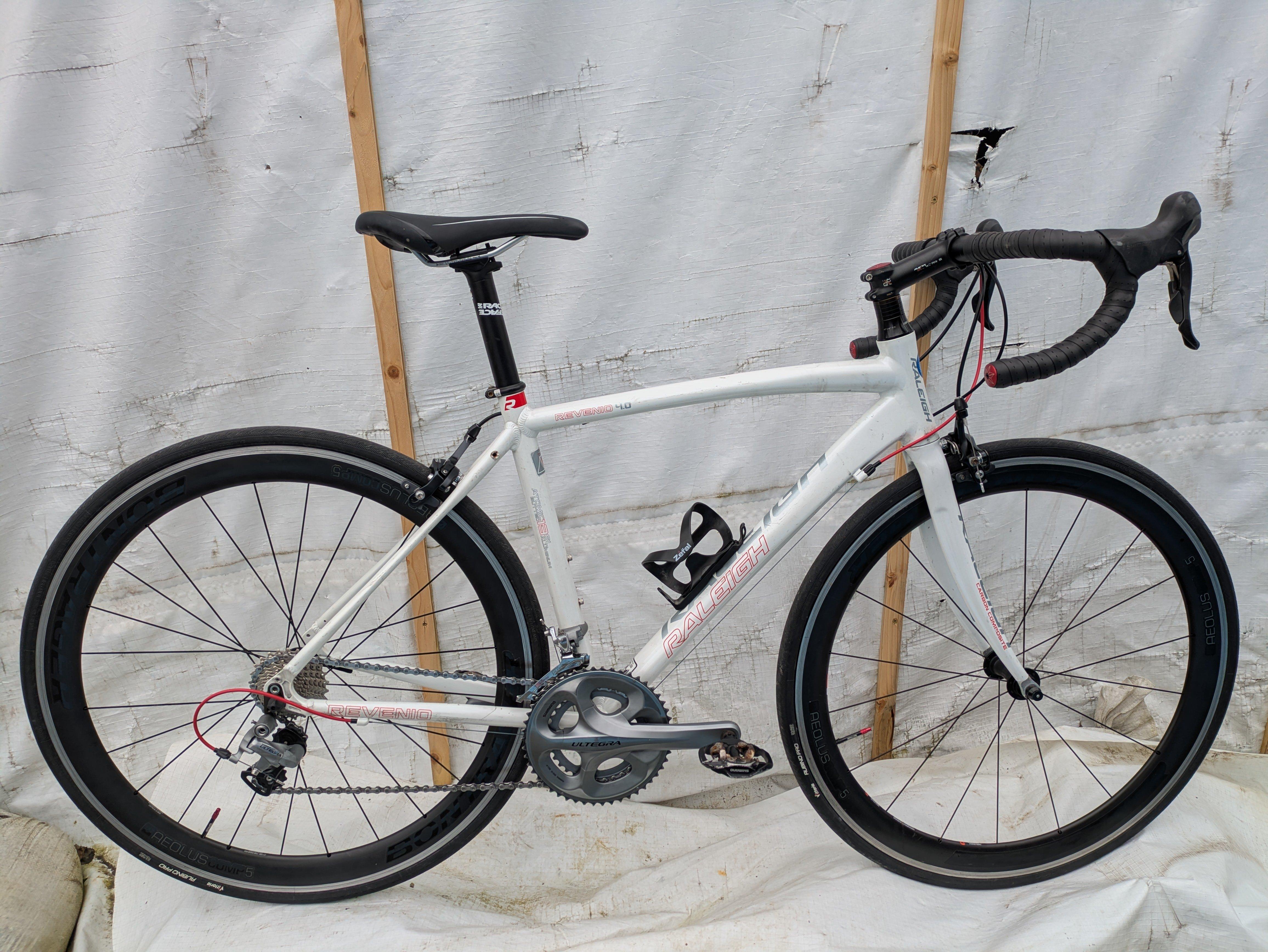
Negative This VO bar is my go-to on almost all of my drop bar bikes, with few exceptions. Anything narrower causes me horrible shoulder pain after about 20 miles. I have broad shoulders, and 46 to 48cm bars are the sweet spot depending on flare, ramp length, etc.