fossilesque@mander.xyzdeleted by creator to Science Memes@mander.xyzEnglish · 2 years agoThat's Quackersmander.xyzexternal-linkmessage-square16linkfedilinkarrow-up1523arrow-down19
arrow-up1514arrow-down1external-linkThat's Quackersmander.xyzfossilesque@mander.xyzdeleted by creator to Science Memes@mander.xyzEnglish · 2 years agomessage-square16linkfedilink
minus-squareIMongoose@lemmy.worldlinkfedilinkEnglisharrow-up53·2 years agoBut the new study, led by Felipe Yamashita, a doctoral student at the University of Bonn, takes this a giant step further. It suggests that B. trifoliolata uses lens-like cells in its leaves, or “ocelli,” to detect the shape and other attributes of nearby plants. Then, it somehow processes that information and uses it to form new leaves in their image. (I know OPs plant is not mimicking real birds like this, my plant is just neat and I wanted to share)
minus-squareneonred@lemmy.worlddeleted by creatorlinkfedilinkEnglisharrow-up17·edit-21 year agodeleted by creator
minus-squarerbits@lemm.eelinkfedilinkEnglisharrow-up8·2 years ago Several scientists told Vox that there are significant issues with the study design.
minus-squarepetrol_sniff_king@lemmy.blahaj.zonelinkfedilinkEnglisharrow-up2·2 years agoxD Yeah, I didn’t know this technology existed.


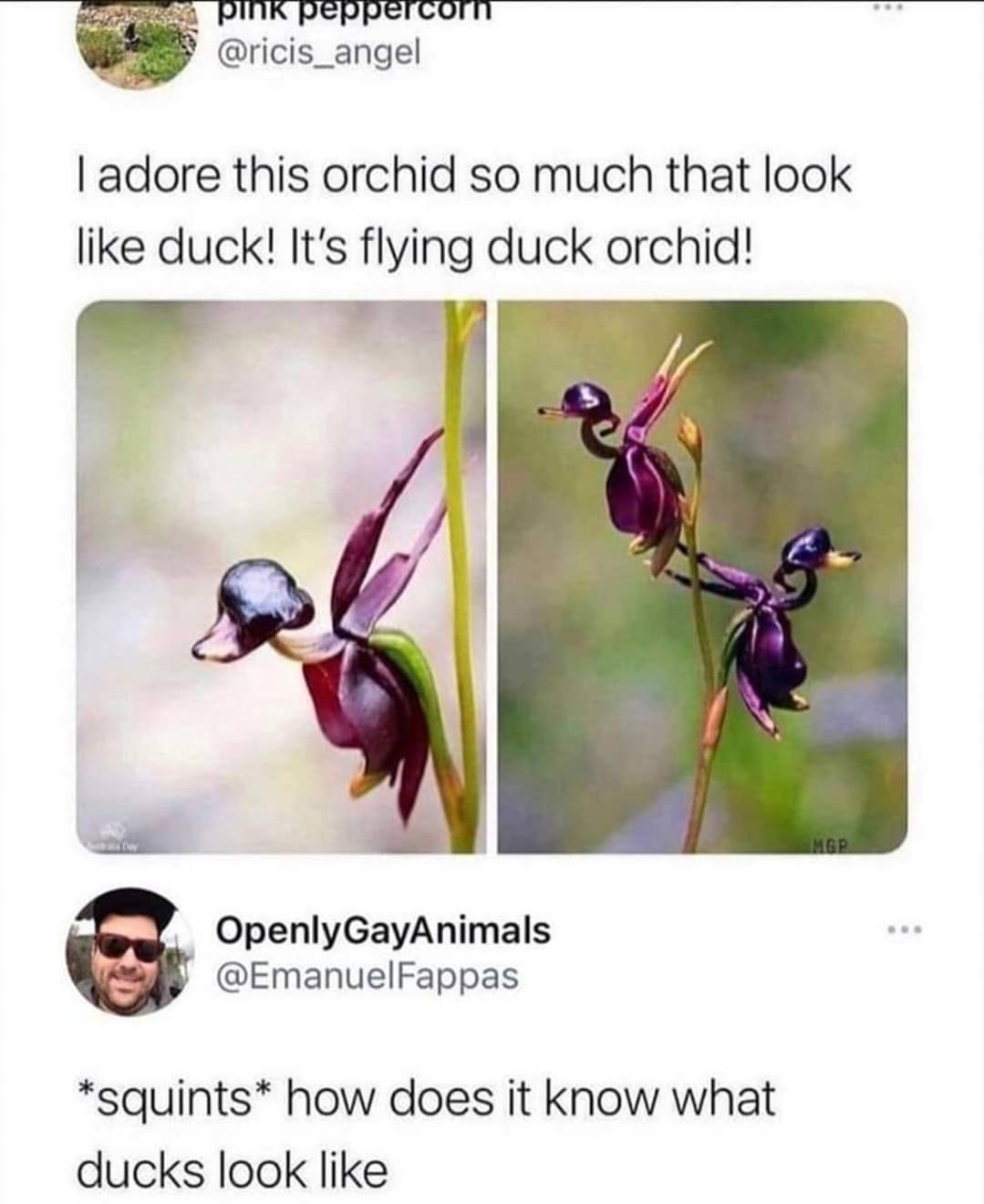
But the new study, led by Felipe Yamashita, a doctoral student at the University of Bonn, takes this a giant step further. It suggests that B. trifoliolata uses lens-like cells in its leaves, or “ocelli,” to detect the shape and other attributes of nearby plants. Then, it somehow processes that information and uses it to form new leaves in their image.
(I know OPs plant is not mimicking real birds like this, my plant is just neat and I wanted to share)
deleted by creator
What the actual fuck.
xD
Yeah, I didn’t know this technology existed.