
I suppose it would be mostly practical skills, cooking, fixing things. Usually had to be done by people themselves.
Maybe also mental things like navigating (with or without paper map) and remembering their daily and weekly agendas.
What other things would be a big difference with the people today?
Navigating a paper map.
You want to drive to a suburb of a big city. You have an address. The internet doesn’t exist.
How do you get there? Well. You use a map. Almost every glove box would have a local and state map, if not a full map book like a Thomas brothers.
Even more scarce is the ability to navigate a city by simply understanding it’s road system. Give me an address in my home city (a labyrinthine nightmare to visitors) and I can just drive there without looking at a map. It’s practically a party trick now that I can tell where people live by just hearing their address. Which sounds absurd until you realize they no one ever needs to do that anymore.
Road networks in most cities in my country are like someone just dropped a pot of spaghetti. The oldest urban areas here are at most 150 years old too, so it’s not like we can blame the Romans.
Me living in a city with Roman walls:
Are you saying I can blame the Romans for not knowing an address? Cool.Actually, it’s a rather small city. It’s hard to get lost when you can easily walk from one end to the other.
What have the Romans ever done for us?
You should become a cabbie in London. They all have to memorise 320 routes, 25,000 streets and 20,000 places of interest, e.g. hotels, stations, tourist attractions and so on. It’s called The Knowledge. There’s some evidence that mastering The Knowledge actually alters the structure of the brain!
I used to do this when I delivered pizza.bMy phone wasn’t playing well with the GPS because I had put a custom ROM on it that happened to be too much for the thing, plus aging, but the ROM was too good in every other aspect. So I just studied the map on the same computer we clicked through orders on, remembered my route, and in a couple of weeks I didn’t even need to look at the map before going around our zone.
Still helps me navigate cities to this day, even now that I don’t drive at all.
Although living in a post-Soviet country helps with city/road design, making it rather predictable in ways lol
I was so confused by this comment until I remembered that US-american streets are planned and numbered. Because while I grew up in a village in the 90s, I wouldn’t be able to tell you where the “Primrosestreet” or the “Blackbird street” is unless I had friends who lived there.
This only works in cities with naming schema that work that way. For my city, if I wanted to go to my old college, I’d drive to Columbia Parkway and have to take Martin Luther King Jr Boulevard all the way in, or divert through downtown to Victory Parkway otherwise. Some places in the city are named logically or you know where they are, but outside of downtown, you abandon the 5th/6th/7th sort of scheme in many cities in America that weren’t initially Planned Cities.
Now, you can do this in a handful of American cities (Indianapolis, for instance), but not most of them.
You can still learn where the streets are. Seattle is one of the worst planned cities in America and you can still navigate it by route if you’ve spent twenty years learning it.
deleted by creator
I wonder if it took quite a bit longer for people to reach their destination. Because not everyone would be as good at reading maps (compared to simply following gps instructions) Maybe that made it more common for people to arrive at different times. or plan longer trips because the driving would take up a bigger part of it.
Also, when driving alone, I can’t imagine holding your map. So you would still have to stop from time to time for long trips. And actually memorize the big lines of how to get to your destination.
I wonder if it took quite a bit longer for people to reach their destination. Because not everyone would be as good at reading maps (compared to simply following gps instructions) Maybe that made it more common for people to arrive at different times. or plan longer trips because the driving would take up a bigger part of it.
Oh it absolutely did. You would regularly have to stop (often after a turn or if you felt like you missed one) and reconsult the map. You just accounted for that additional time. Longer trips are often less of an issue, because its usually, you get to a big main highway and its cruise most of the rest of the way.
And plenty of times, you might get lost/ not be able to find yourself on the map. You’d have to pull over and ask for help/ directions. You might write the directions down on a piece of paper, but that doesn’t do you much good if you missed a turn and didn’t know it.
Depends on the area and how familiar it is and how hostile it is to navigation. I can beat the Google maps time 9 out if 10 times in Seattle because Google sends you through some seriously dumb intersections.
In Minneapolis, Google maps almost always tells me to leave the parking lot from work, go down the road, and turn left onto a highway during rush hour. No lights.
The way I actually go is to turn 1 block “early” and wait at the stoplight.
Sure, in theory it would be faster to take Google’s way if there’s no traffic, but again – this is when I’m leaving work!
deleted by creator
As someone who travelled for work before and after smartphones, absolutely. You couldn’t just open Google Maps, search a business and go there, the problem wasn’t going city to city, but finding a specific place in or outside a city. If you got a request to go to X business either you already knew how to get there, or it would take some planning.
Nowadays my company can receive a request from a customer in another country, and in 1 hour they can plan the trip, reserve the rental car, book a plane, book an hotel for the night. That just wasn’t possible in the past.
The main maps I used for driving (back in the day, UK, 1986) were ‘books’ rather than large fold out maps. At local level, an A to Z. At national level, an AA road map, this has the format of a small newspaper, however in thicker paper.
Actually a much better way was to use a street directory if you know your way around the town even a bit.
Better even, and how we actually did it was giving instructions. “200m after the large tree by the field, drive on for about 400m, there’s 2 junctions before and mines the third one.”
But I also know orienteering ofc as a Finn
Swede here, how would using a street directory help you navigate without a map?
Sure, I know that at least here in Stockholm and it’s suburbs that when a new area is being developed, they name the streets after a similar theme.
But knowing that Sommarvägen in Täby is located within the district of Hägernäs doesn’t get you very far.
Ugh I hate those new suburbs with themed street names. They are always a maze and I get turned around in them. My mate Martin used to live in one of those where all of the streets were some variation of grass. We would be in the car and ask amongst ourselves: “Where does Martin live again? What was the street? Wasn’t it grass something or other?”. Only to get to that suburb and get really confused as all of those streets were named grass something and then we really couldn’t remember.
But back then before GPS was a common thing and before we had cellphones, we had a sort of vibe navigation system. Getting to the correct city was easy, even if you didn’t know where it was, there would always be signs. But then when we got near our destination, you’d sorta drive in a direction that felt right. You’d be amazed how often we just found the right place like that. Only rarely did we have to check our navigation book tucked under the seat or fold out a big map on the dash. Never did we need to ask for directions, that simply wasn’t done.
You look up a street name. That entry tells you which street it begins from. If you don’t know that, then you look up one further. And repeat until you get to such a main road you’d know it even after looking at a map.
So basically you’d look up the street and then browse back and after you’d have a sort of gps like instructions. “main road until you see X street, then turn there, then drive until you see Y road” etc.
I had several in the car I drove, for all the nearby cities/towns. Many in same covers. So it’d cover the main city and outlying towns. Never had to use a map. (Although again, I can if needed.)
I don’t think I have ever even seen a street directory like that, only a street register showing the placement on a map.
I hadn’t either before driving a taxi. (pre-gps)
“You wanna go down Three Oak lane, I forget what its ‘proper’ name is, but there used to be a farm there called Three Oak Farm, so that’s what we all call the lane round here. 'Course the farm’s gone. And so have the oaks. Anyway, go along there until you get to the field where the unexploded bomb was found back in '68, and turn right. Then left past the field where the cows got sick last year. If you reach shagger’s hill, you’ve gone too far. Now there’s a ford down that way, so you can’t miss it. Except, I suppose, in this weather since it hasn’t rained in a month and the ford’s probably dried up. Most important thing though, you don’t want to start from here.”
Actually a much better way was to use a street directory if you know your way around the town even a bit.
You generally only had a street directory of your OWN town, outside of specific professional settings.
I still have a London A to Z!
I was so obsessed with NYC subway maps lol (circa 2010)
When I was a kid, I used to just draw my interpretation of the subway routes + streets and like make my own “map”
I had a few big atlases in my car. One for my city, one for my state, and if I went somewhere else on vacation or for business, I’d get an atlas for that area as well. After a while you have a library of them in a box in the trunk.
Driving and flipping through an atlas was the pre-GPS version of texting and driving.
I still carry a state map in my truck
That reminds me that I never moved the map from old car to the
newcurrent one.
Memorizing phone numbers
I feel like it’s still important to remember the numbers of some important contacts, so you can actually call them using somebody elses phone if yours dies or breaks. But I suppose not many people would bother
Lol, not only do I memorize phone numbers of family members, I did my parents taxes so often, I can memorize the social security numbers of all my household members and all their birthdates.
Also I still remember addresses I used to live in.
Mmmm, interesting, can you list off that data along with your mother’s maiden name? It’s uh for a friend…
Sure it’s [data expunged] and [data expunged] and [Error: Security Clearence not found]
Lol, sorry, you seem to lack the credentials. It’s “need-to-know basis” only. :P
Seriously tho, my family is so like… idk I guess “emmeshed”? Like everything is so entangled.
Like my mom literally use my brother’s legal identity to take out loans… and also some assets are put under his name
Also like mom used to not even have a screen lock on the phone until someone robbed her so now there’a a screen lock.
And like I have access to their phones… and sometimes messed with settings and mom got mad at me.
I don’t even have any legal papers in my physical posession except like my state ID, cuz my mom wanted to “keep it safe” for me…
To be fair: I held on to my first US passport as a teen, and I kinda damaged it lol (got it just to make sure my Citizenship status is properly documented in the legal system), never even had a chance to actually use it since parents were so busy all the time.
If there is ever a family issue… oh shit we all know each other’s info, we could theoretically do so much damage to each other like a family “civil war”.
deleted by creator
Same here. I even still remember my phone number from 40 years ago, living as a child in Tehran, Iran. Numbers just stick in my brain.
We didn’t memorise numbers! We just remembered them after having to manually dial them a hundred times.
That’s memorization in action
That skill morphed into remembering user names and passwords.
Eh even before the Internet people had other tools to help with this. Physical books with people’s addresses and phone numbers. Specialized holders for various business cards. Yellow pages and white pages. I suppose a lot of incidental memorization is lost but I don’t think it’s really a skill lost so much as the tool changed.
And those tools pre-date the invention of the telephone, so it’s not like people spent hundreds of years memorizing phone numbers before writing was invented.
Why wife’s phone number is ‘babe’ and ill die on that hill.
If you knew how to drive, you most likely knew how to use a manual transmission.
This one depends on where you live, I suppose. In some european countries it’s still quite common to learn to drive with a manual.
Quite common as in, I’ve only met one person here in my life who can only drive automatic. Electric cars being more mainstream means many more people are driving automatic, but if you do your licence in an automatic you are not allowed to drive a manual car. So I’d wager over 99% of people can drive a manual. This is in Belgium btw.
deleted by creator
Yes, true here in Denmark for example, but it is slowly changing on account of the rising number of EVs.
Lots of semi truck drivers know how to drive a manual and semi truck driver is one of the most common occupations in the US. Everyone at my company’s location knows how even though we have an all automatic fleet.
Edit: Just to address the premise of the question only a couple of us were driving 50 years ago.
You likely already know this but if anybody else reading is interested, this is because if you test for your commercial license in an automatic then you’re restricted to only automatics. The schools are still teaching manual, so it doesn’t make any sense to learn that then test in an automatic and get that restriction.
Is it really?
How scary is it to drive down a big hill?
Yeah it really is. Most everyone trained before the last 15 years were likely trained on an asynchronous manual transmission.
In good weather? Only the first few times. In bad weather? I’m on high alert like a dog who knows the mailman is delivering a vacuum cleaner. Take it slow, make sure the brakes work, and know where the runaway ramps are. A manual transmission is usually preferable for mountains for better control or for at least the illusion.
Stay safe out there! Godspeed!
Almost every adult in the UK learns on manual - I’ve known about three people in my life who learned on automatic and are only licensed to drive automatics - but with the rise of electric cars (and an increase in automatics generally) I wonder if my kids will learn.
What I never learned, but which my parents did was exactly when and to use the choke on a car. I know fuel injection made chokes unnecessary and I’ve never driven a car that had one.
deleted by creator
Did u ever use a different kind of motor with one?
I don’t think so. Oh, wait, I have a petrol strimmer / bushcutter that has a choke! So, yes!
In Germany nowadays everybody who has a license also know how to drive manual.
I have to add that you’re 99.9% correct, there are rare people who only learned automatic and may only drive those. I know exactly one person, so it might well be 0.1% 😁
I still have a manual
Writing in cursive
This is such a good thing. Whenever I look at cursive writing it’s indecipherable. It being included in school curriculums really feels like someone went “no I’m good at writing! Cursive writing is good! Children need to learn it, in fact.”
Do you mean that you can’t read it at all? It’s really close to lettering, it’s just got swoopies attached to most letters. There are only around 4 that you have to know how they’re different, but the rest are super similar.

This is definitely dependent on the person writing. Some cursive is illegible, others is totally fine.
I mean, some non-cursive is totally illegible. My print is pretty bad, but my cursive is fine
That’s true. I learned cursive first, but never really properly. Then learned print instead. Now my writing is a mashup of cursive and print, with the same letter in a single sentence sometimes using different writing styles. Great!
Swoopies. ❤️
There’s a bunch of different systems that vary how close they are to standard print
I’ve tried to read 19 century cursive journals and other historical documents. It’s impossible, and I’m old enough to have learned it at school.
There’s a reason engineers and technical disciplines used block/print letters.
Capital letters:

F, R, and z
At this point it’s actually kind of useful as a mild coded writing that excludes idiots.
My cursive is still excellent
Meeting up with people, no phone. You arrange a place and a time, and you show up, if the other person isn’t there… You wait.
It was super important not to leave people hanging
Recently I have started having to ask hours before a plan is meant to execute, whether the other parties are still attending. Three times out of four I’ve been cancelled on - forgot, too busy, whatever the reasons were.
When was I meant to find out? When I called you asking how far away you are, only to find you’re not coming at all?
Basically, those people were not going with you. I wouldn’t consider them your friends. Friends would at least tell you they are bailing so you don’t go
Sometimes I’ll be getting myself ready to do the thing, but if someone reaches out and gives me an out… Yeah I might just take them up on it. I’m big on canceling plans
Apparently recognizing and handling fascists.
1975 is a weird place for that, actually. During and right after WWII motivations for fighting it were mixed. Obviously most white Southerners shipping off to Europe weren’t anti-racist. Obviously Einstein was. The sanitised, mythologised version that people think back to today really got going in the 80’s.
I remember last rememberance day in Canada, our public broadcaster did a live interview with a veteran. He was an actor involved in recruiting, and just casually mentioned it was a blackface act.
Using a card catalog at the library to look up books.
I worked in a private library that still had it’s card catalogue up until 2005. People were always ripping out the cards (there was something like a metal knitting needle that passed through a punched hole in each card to stop idiots from destroying the catalogue, so the gobshites ripped them out instead).
The early digital catalogues weren’t great so the old card system persisted.
I never learned this. I always just browsed around and read what caught my attention. Maybe if I was doing research, I would have had to learn it.
It was a fairly regular part of our public school education
Idling away the time, being bored.
Doing nothing. That might be the biggest loss in the last decades.
There is just this overtone of restlessness and tension that didn’t seem to be present prior.Also connection with your local community. 50 years ago, it was basically a given. It was part of life.
Now, not so much.
deleted by creator
I heard an anecdote that one of the reasons older structures last longer than newer buildings was until the days of using Log Tables, engineers had to round up to the nearest values to match the values in the log table when calculating complex forces, and this rounding compounded when multiplied against other rounded values. Once computers were being used with design, you could calculate the forces exactly to minimize material costs.
I’ve got a log table in the back of one of my reference manuals. The results go up to 6 digits. You aren’t going to get appreciable material savings after 2 digits.
And in some cases like structural steel, the built up members were far more optimized 100 years ago compared to today because the labor required to build the optimized structure was that much cheaper.
I think being good at estimations and having some intuition when something doesn’t match up for a restaurant bill or grocery shop is helpful though. And I don’t think a lot of people would get out their phone to double check the calculation.
But yeah, having this magic rectangle in our pockets is pretty nice.
Skill most people had:
- Sewing, at least basic sewing. Tailors were expensive, and if you just needed to shorten a pant leg, or fix a hole, you just sewed it. Nowadays mending clothes is almost pointless, given they’re basically made to get holes in them immediately.
- Speaking quickly to avoid collect call fees. People would call home from a hospital phone, which would charge the receiver’s bill if they accepted the call. The phone would ask for your name, and you’d say your message quickly, which lead to your parents at home getting a call from “Baby’s a healthy boy” and then hanging up.
Difference: The whole world doesn’t smell like cigarette smoke anymore. Even when I was a kid in the early 00s, it still smelled of cigarettes basically everywhere.
So y’know. We can’t sew a patch on, or speed rap to avoid collect call fees, but at least drunk driving is illegal, and we have seatbelts
State your name:
Bob, the Adababyeetza boy.
Cursive writing
Still taught everywhere in Europe.
Fun fact: taking notes by hand helps you learn better than typing them.
I use a graphical tablet (wacom) to write my notes. If i write my notes, i remember them much better.
I would type my notes in class because it’s faster, then rewrite them by hand to study off of. except by the time I finished rewriting them, I usually wouldn’t need to study off them any more
They stopped teaching it here in the US, which makes me wonder what people will use for a signature.
My daughter is learning it in public school.
My son is learning it in 1st grade at his school.
Not entirely, my son still had to have lessons on it in elementary school for some reason.
Because it’s better to take notes by hand, and you need cursive for that. Bonus: your writing looks like that of an adult. Bonus 2: you can read other people’s writing (mostly).
I’ve been able to take plenty of notes by hand without cursive. It’s a preference, not a prerequisite.
Definitely more than 50 years ago, but this little piece of Americana is interesting
Families often had small nail-manufacturing setups in their homes; during bad weather and at night, the entire family might work at making nails for their own use and for barter. Thomas Jefferson wrote in a letter: “In our private pursuits it is a great advantage that every honest employment is deemed honorable. I am myself a nail maker.”
Thomas Jefferson made nails for commercial profit in purpose-built workhouses on his estate. Or to be specific, his child slaves made the nails
Ah ha, that one I did not know. I guess slavery is also Americana, though a whole lot less quaint than the thought of industrious households making their own nails
I like the preceding lines
Nails were expensive and difficult to obtain in the American colonies, so that abandoned houses were sometimes deliberately burned down to allow recovery of used nails from the ashes. This became such a problem in Virginia that a law was created to stop people from burning their houses when they moved.
Operating a slide rule. Managing a menstruation belt. Navigating adult life without having your own bank account (if you were a woman in the US). Mending clothes, ironing clothes, making clothes.
I gotta ask, menstruation belt?
Before adhesive pads were invented to stick to your underwear, you had to wear a climbing harness and use safety pins to keep your pad in place.

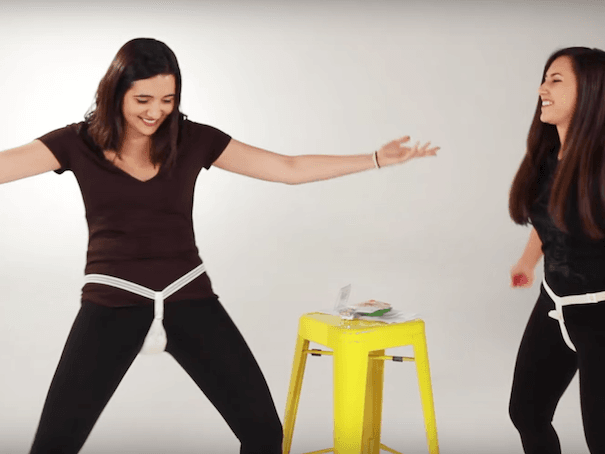
This seems like a skill that deserves to die. Adhesive pads, cups, tampons, etc. seem way better.
Oh wow, thanks for the reply and TIL!!!
I remember seeing this among my grandma’s belongings when I was a kid. It was… grimy.
I didn’t have the faintest idea what it was.Oh dear…
TIL!
The slide rule thing is real. Some of those guys didn’t move to calculators when they came out because they could use them faster than typing.
Writing thank you cards and letters.
People should definitely do this more often. Makes it so much nicer to receive an actual physical card from someone.
Postcrossing also still exists, nice to send some postcards to random people around the world.
I still write thank you cards. People really like getting them. In my mind, it’s worth the [small] investment of my time and effort to show my appreciation for something.
Reading card files in libraries.
Servicing and repairing many things in the house, but devices were far more easily diagnosed and repairable due to not being computerized. Really the “it’s broke and I gotta fix it” ability across age groups has really dried up. Doesn’t matter if it’s changing a tire on a car, or a kid having to fix a punctured tube on a bike tire to get to their friend’s house. They don’t ride anywhere for that matter. Changing brake pads. Changing the air filter in the home HVAC. People don’t do this stuff anymore.
Being bored.
Reading newspapers, books, magazines, etc. I don’t think people read as much anymore.
Hobbies. I think they’ve kinda died off, at least the physical ones. Model planes, trains, building stuff in your garage, cars, etc. Some of it’s been priced out of range or has gotten too technological for some, like cars, but manually creating something as a pastime has really disappeared.
Remembering a lot of phone numbers in your head.
I’m sure I’ll think of more, but it’s been a while since I was a kid and thought about pre-modern tech society.
Ooh I just changed my air filter for the house the other day!
Maintenance in general does seem to be something lacking in an age of disposable and easily replaceable items. Often times it is less expensive to replace vs repair, which is an upside down paradigm for sustainability…unless the retired item is recycled or repurposed.
Good for you.
DIY filter change? $25 give or take depending on the filter. Service company doing it? $100 for the luxury of them arriving, $30 filter, $150 min labor rate to maybe do a service check, then whatever $ for issues they find.
FWIW think it’s good to have pros check stuff once in a while, they’ll see things I won’t know to check.
Definitely agree with having pros check in on stuff I’m not 100% confident in.
…but manually creating something as a pastime has really disappeared.
Or have gone commercial. People are definitely still manually creating, but a lot of it has been made to be sold, either for personal gain or to be able to afford to live.
Physical hobbies are alive and well, but kinda niche when compared to things like video games or tv/movies. I got into model building a couple years ago, and there are plenty of folks who are into it. I would argue the hobby is bigger than it’s ever been. Same goes for other things like r/c and tabletop gaming.
Also, don’t forget about 3d printing, which would definitely fit as a physical hobby. It also augments the previously mentioned hobbies, as well as many more.
I’m going to have to look up this card index thing.
Reading newspapers, books, magazines, etc. I don’t think people read as much anymore.
Depends, are you excluding reading on a screen? The hard numbers are that people do way, way more in text now, and are better readers and writers as a result.
Not OP, but I believe there is a big difference between reading a book or longform article vs 3 paragraphs in a Fediverse thread. I certainly feel it when I sit down to read longform (but i still often read longform).
That hasn’t been my experience. I guess I get more immersed in something longer, but basically, so what? Either will help with spelling and grammar, either can give new insight.
There’s plenty of longform garbage, too. A helpful Lemmy post can definitely be worth more than a Rex Murphy op-ed or the entirety of Das Kapital.
But what are they reading? Being a better reader or writer is only as good as the information exchanged. Is it memes? Clips? How about per capita?
Yeah, it’s possible people are reading more crap now. Although there was definitely less-than-highbrow literature around then, as well.